
These days, a lot of my conversations happen in chats. Messaging is quick, convenient and part of my daily routine. Still, some things are simply better said face to face.
MY DAY IN CHATS
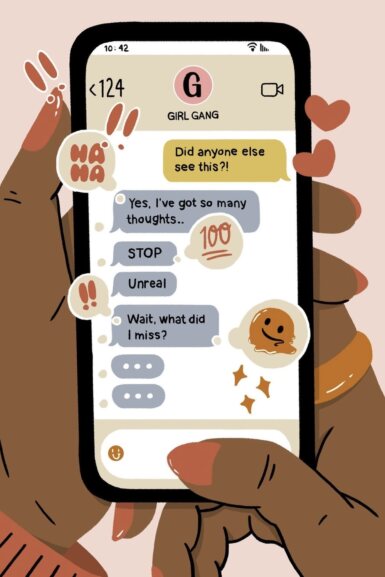
Most mornings, I start by checking my phone. I chat with my classmates, and we have a separate group chat for our English class. There’s also a larger chat for everyone studying Information and Communication, where we share news and useful information. I keep in touch with my family through messaging apps too. Telegram is my main app, though I use Viber now and then. It’s an easy way to stay connected when everyone is busy.
WHEN A MESSAGE SAVES TIME

Messages are especially helpful when a call would be inconvenient. Recently, I needed some information from my mother, and I needed it quickly. She was at work, so I didn’t want to interrupt her with a phone call. I sent a short message instead. She checked it when she had a moment and replied within minutes. I got what I needed, and she could get on with her work.
WHEN WORDS ARE NOT ENOUGH

Texting has its limits, though. Sometimes I write a message that seems perfectly clear to me, then end up sending two or three more to explain what I meant. Without tone of voice or other nonverbal cues, even a simple sentence can sound confusing. Video calls solve part of the problem, but long ones can be exhausting. There’s even a name for it: “Zoom fatigue”. Sometimes I wish we could just talk for a minute and clear it all up.
WHY WE STILL NEED LIVE CONVERSATIONS
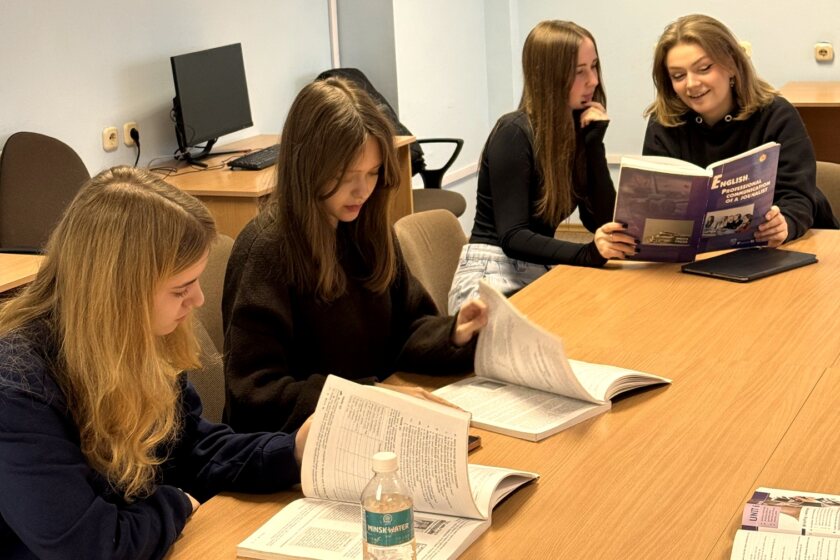
There’s also a more personal reason I like meeting people. When I have tea with friends, I’m not just sharing information: I’m listening to their stories, watching their reactions and laughing along. A joke in a chat can be funny, but it’s even better when you hear everyone laugh. I don’t want all of that to happen through a screen.
MY ADVICE
If you study or work online, make your messages clear and polite. A short, specific text is useful whether you’re organising a class project or talking to colleagues. But when explaining something takes several messages, try a call instead. And when you have a chance to meet a friend, take it. That’s my motto: “Message when it helps. Meet when you can.”
Darya Eryomina a second-year student specializing in information and communication
Viktoria Dantsova, a second-year student specializing in journalism, a junior designer
Artyom Pumpur, a second-year student specializing in journalism, a junior typesetting editor
Viktoria Dantsova, a second-year student specializing in journalism, a web-editor
Proofreaders group: Daria Zobnina, a teacher, International Journalism Department;
Yevgeniy Nekrash, a second-year student specializing in information and communication



I really liked this article. It talks about a very common situation today: how to balance texting and talking in real life. I liked that the article feels very real. I totally understand the part about sending extra messages just to explain what you mean, because people can’t hear your voice in a text. Also, the part about being tired of long video calls («Zoom fatigue») is so true.
My short advice, which fits the author’s idea perfectly: use messages for quick questions and plans. But if a topic is serious or emotional, save it for a real-life meeting so you don’t misunderstand each other.
This is such an accesible and relatable piece! The author has captured our daily lives perfectly: we really do spend our time — from morning till night — in chat threads, and sometimes its just easier to send a messedge than to make a call. I especially loved the example about the mom at work — its so true to life.
But the most important point — one thats impossible to disagree with — is that no messedge can ever replace face-to-face interaction. A smile, the laughter of friends and the simple atmosphere of just sitting there with a cup of tea — thats what matters. The motto, «Message when it helps. Meet when you can.», is a fantastic takeaway. After reading this I genuinely felt like putting my phone away and inviting some friends out
I want to thank the author for this positive and relatable article! Despite the fact that the text raises a serious topic, it is very easy to read, brings a smile, and leaves a pleasant aftertaste.After reading, I decided that this weekend I will put my phone away and meet my friends in real life. Just like the author, I wanted to sit together over a cup of tea, listen to their stories, see their genuine reactions, and laugh at jokes not through emojis on a screen, but looking into each other’s eyes. I will also take the author’s motto into service: ‘Message when it helps. Meet when you can!’I wish the author continued success in finding such engaging and relatable topics, as well as plenty of live communication and warm face-to-face meetings with friends!
I think the article is relevant amd interesting. It shows that digital communication is convenient, but face-to-face conversations are important for emotions and understanding.
I really liked the article «Digital or Face-to-Face? Why We Need Both» because it talks about a very important topic for everyone today. I agree that texting is fast and useful, but it is sometimes hard to understand people without seeing their faces or hearing their voices. The part about «Zoom fatigue» was very interesting to me, and I also liked the idea that meeting friends in real life is much better than chatting online. After reading this article, I decided to spend less time on my phone and meet my friends more often. Also, I will try to write clear messages, and if a chat takes too long, I will just call the person instead.
Thank you so much for this insightful article, Darya! I really loved how you highlighted the value of live conversations and captured the frustration of ‘zoom fatigue’. It’s so true that texting has its limits when we miss tone of voice and nonverbal cues. As a suggestion, it would also be interesting to add a section about the role of voice messages, they kind of bridge the gap between quick texting and long calls when you’re busy! Great work!
I really enjoyed reading this article. It perfectly shows the difference between correspondence on the phone and communication in real life. Examples — such as a message to a busy parent or «Zoom fatigue» — look very believable. The main idea is clear: phones are great, but nothing can replace the warmth of a live conversation. I especially liked the final motto: «Write when it helps. Meet when you can.» This is the perfect advice. Great job!
I liked this article. The author explains clearly that messengers are convenient and save time, but they don’t replace face‑to‑face communication. In correspondence, emotions are often missing, and it can be difficult to understand each other. And long phone calls are tiring. After reading it, I decided to meet with friends in person more often and to call if a message doesn’t convey the emotions.
This is a very interesting article. I agree that digital messages are super helpful when we are busy. Like the author, I often send a quick text to my mom or classmates when I don’t want to interrupt them. However, I also know that texts can be confusing because we cannot hear the tone of voice. Sometimes it takes five messages to explain one simple thing, and a quick call is much better. I really liked the author’s motto at the end: ‘Message when it helps. Meet when you can.’ I think we all need to remember to put down our phones and meet our friends in real life more often.
Thank you to the authors for this thoughtful article! I really enjoyed how you balanced the convenience of messaging with the value of live interaction. You made a great point about «Zoom fatigue» and how texts sometimes miss the right tone. I totally agree with the motto mentioned: message when it helps, meet when you can. After reading this, I felt inspired to call my friend and finally set up a real meeting instead of just texting. Thank you for sharing such a helpful perspective!
«Great read! We are so addicted to our screens that we forget how much mental energy it takes just to process the constant flow of information. I completely agree with the conclusion: nature demands nothing from us and gives us exactly what we need—silence and the chance to hear ourselves think again. I’m definitely going to try the 20-minute nature break today!»
«This article highlights how digital messaging makes our daily communication much faster and more convenient. Through personal examples, such as staying connected with classmates in group chats and texting a busy mother at work without interrupting her, the author clearly shows the practical benefits of messaging apps. «
This is a very relevant and well-written article. It perfectly captures the modern phenomenon of digital fatigue. We are constantly bombarded with information, notifications, and the pressure to be always «online,» which our brains simply weren’t designed to handle. The point about peripheral vision relaxing in nature, which then allows our thoughts to become more organized, is a fascinating scientific detail. It reminds us that we don’t need a drastic escape to the wilderness; even a short walk in a local park without looking at our phones can act as a powerful reset button for our mental health.
«This article highlights how digital messaging makes our daily communication much faster and more convenient. Through personal examples, such as staying connected with classmates in group chats and texting a busy mother at work without interrupting her, the author clearly shows the practical benefits of messaging apps. However, the text also makes a thoughtful point at the beginning: even though texting saves time, some important things are still better said face to face.»
The article rightly notes that digital communication saves time but cannot replace the depth and warmth of face-to-face contact. The mention of «Zoom fatiigue» is especiate the autor’s motto: «Messege when it helps. Meet when you can» — it’s not about choosing formats, but about choosing them consciously depending on the task.
What a helpful and friendly article! I resonate with the author»s perspective on communication, so I read this article with pleasure. The author offers a thoughtful look at digital communication, noting that it become indispensable in today»s world — a very sound and sensible point. Thank you for your article!
Darya, thanks for your thoughts! I absolutly understand the problem of not having nonverbal cues during messaging. Sometimes it turns out very tiring to explain what have you ment, I think it’s very common issue.
Great article! Texting saves a lot of times, but nothing beats a real conversation over a cup of tea.
The idea of finding a balance really resonates with me: while chats certainly save time, a single short message can sometimes spark an entire back-and-forth exchange that would have been much easier to resolve with a quick phone call. I especially agree that, without tone of voice and non-verbal cues, meaning is easily lost—and in-person meetings offer so much more than just a simple exchange of information. I also appreciated the practical advice: keep messages brief and polite, and if an explanation starts to drag on, just make a call
A good article — without extremes. The author correctly shows: messengers save time, but live conversation gives what cannot be conveyed by text — intonation, reaction, laughter. The motto is «Message when it helps. Meet when you can» is a great rule. It is especially accurately noted that without non-verbal signals, even a simple message can sound ambiguous.
Thank you for the article! For me, it was a good reminder. Indeed, we often hide behind screens to «save time,» but in the end, we lose the very warmth of communication that only a face-to-face meeting can provide. I’ll take the advice from the article to heart: if a message requires a long explanation, it’s better to just call or meet up.
l think this text is well-organized and easy to understand. It looks at both sides of digital communication and face-to-face talk instead of saying one is completely better.The examples are close to our student life: class group chats, messaging family, online meetings. They help readers feel the topic is real.I agree with the writer. Online messages save time, but live conversations bring warmth and real feelings that we cannot get only from texts.
For me, both online and offline interactions have their own pros and cons. While online interaction offers convenience, offline interaction provides a better, more tangible experience you can’t truly get to know someone through a screen, but you can in person. That’s why this article has been incredibly helpful to me, it’s a great piece.
In the information age, online communication has become more common than face-to-face interaction due to its greater convenience; text messaging, in particular, is highly useful when making a phone call is not feasible. Naturally, text messaging also has its limitations. Ultimately, it turns out that face-to-face conversation remains necessary.
I really agree with this text. Digital messaging saves our time, yet it has clear limits. Sometimes we need face-to-face conversations to avoid confusion and feel real emotions. Neither way is perfect. It is wise to combine both in our daily life.
This article makes a sensible point: we need not choose between digital communication and face -to-face contact. Digital ways are fast and convenient for people far apart.Yet screens cannot bring the warmth of real talks. Meeting in person helps us catch body language and share ture feelings.They are not opposites; using both well improves our life and study.I agree. As an international student,I chat onlion with family but still love meeting friends face to face.Thank you Darya Eryomina!
I really agree with the idea in this article.Digital ways are fast and convenient, but face-to-face communication brings warmth and real feelings.We can use both of them well in our daily life. Text messages may cause misunderstanding without non-verbal hints. Meeting people in person lets us enjoy true emotional conncection.
The author makes a great point that digital messaging and face‑to‑face talks are both necessary for modern life. Chat apps save our time when people are busy, yet text messages easily cause misunderstandings without tone or non‑verbal cues. I also know “Zoom fatigue” from my own online‑study experience. I totally agree with the motto: “Message when it helps. Meet when you can.” Balancing two communication styles is smart for students
This is such a balanced and thoughtful piece 💬🤝. The author doesn’t demonize digital communication or romanticize face-to-face interaction — instead, they show how the two complement each other 💻🌐. I especially appreciated the practical advice: ‘Message when it helps. Meet when you can.’ It’s a simple but powerful reminder that technology should serve our relationships, not replace them. A refreshing take on a topic that often gets polarized. Thank you for this insightful and timely article 🙏✨